Skip to content
About Stephen McDaniel

I've built the models.
I know what to question.

I was Netflix's first data scientist, working on the original customer lifetime value and cohort models. Later, I helped bring forecasting to Tableau and taught more than 30,000 people to work confidently with data.

Today, I help subscription businesses understand which customers to acquire, grow, and keep. I can evaluate an existing LTV or churn model before recommending a replacement. When we build a new system, your company owns it.

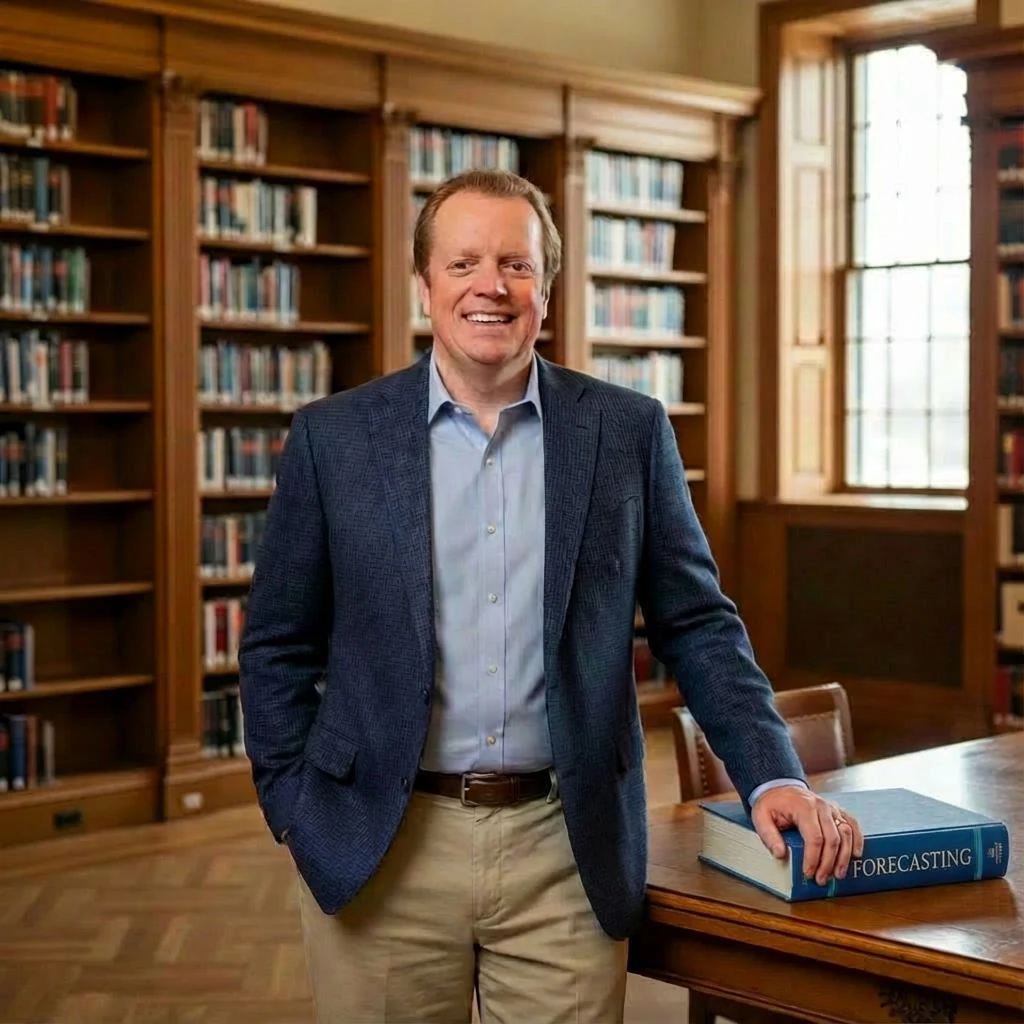
Stephen McDaniel standing in a library beside a forecasting book
Stephen McDaniel, Founder
NetflixFirst data scientist; original customer LTV and cohort models
TableauForecasting capabilities and original hands-on training
30,000+Professionals taught
$1B+Pharmaceutical transaction modeling

These are career credentials and project scope, not reported financial results from FIP engagements.

Why FIP exists

A forecast should change a decision.

If it doesn't, why build it?

At Netflix, the question wasn't simply how many customers we'd acquire. It was what those customers would be worth over time.

We looked beyond the first payment: where customers came from, how their behavior changed, which cohorts stayed, and what those relationships would be worth.

I've spent more than three decades building analytical products, forecasting systems, and decision models, then teaching people how to question and use them. The work has ranged from subscription economics to major business decisions where assumptions matter enormously.

I started Forecast Integrity Partners for two kinds of clients: people who want to learn the method, and companies that want me to build the system. In both cases, you see the assumptions, the tests, and the limits of the forecast.
The experience behind the advice

I've done this work.

Three examples of work behind my approach. Below, you can also inspect a published customer economics case rather than rely on claims alone.

01

Customer lifetime value at Netflix

As Netflix's first data scientist, I worked on the original models for customer lifetime value and cohorts. Those models helped frame a bigger question than first-sale revenue: which customers would create value over time?

Customer economics
02

Forecasting and training at Tableau

I helped develop Tableau's forecasting capabilities and original hands-on training. I've spent decades making sophisticated analysis understandable to the people who need to make decisions with it. Read the original training history

Usable forecasting
03

Scenario modeling for a $1B+ transaction

I built scenario and simulation models to support the evaluation of a pharmaceutical deal worth more than $1 billion. The lesson carries across industries: important decisions need explicit assumptions and tested uncertainty.

Decision discipline
How I work

Clear questions. Tested forecasts. No black boxes.

The goal is not to impress you with a complicated algorithm. It's to help you make a decision you can defend.

01

Start with the decision.

What will you do differently if the forecast is right? We define the economic question before choosing the model.

02

Show the work.

You see the assumptions, evidence, uncertainty, and tests. We challenge the answers before acting on them.

03

Leave you stronger.

In the Lab, you learn the method. In an engagement, your company receives the agreed models, code, and documentation. You own what we build for you.

Built it. Taught it.

I don't hide the method.

I've taught more than 30,000 professionals, from first-time analysts to experienced business leaders.

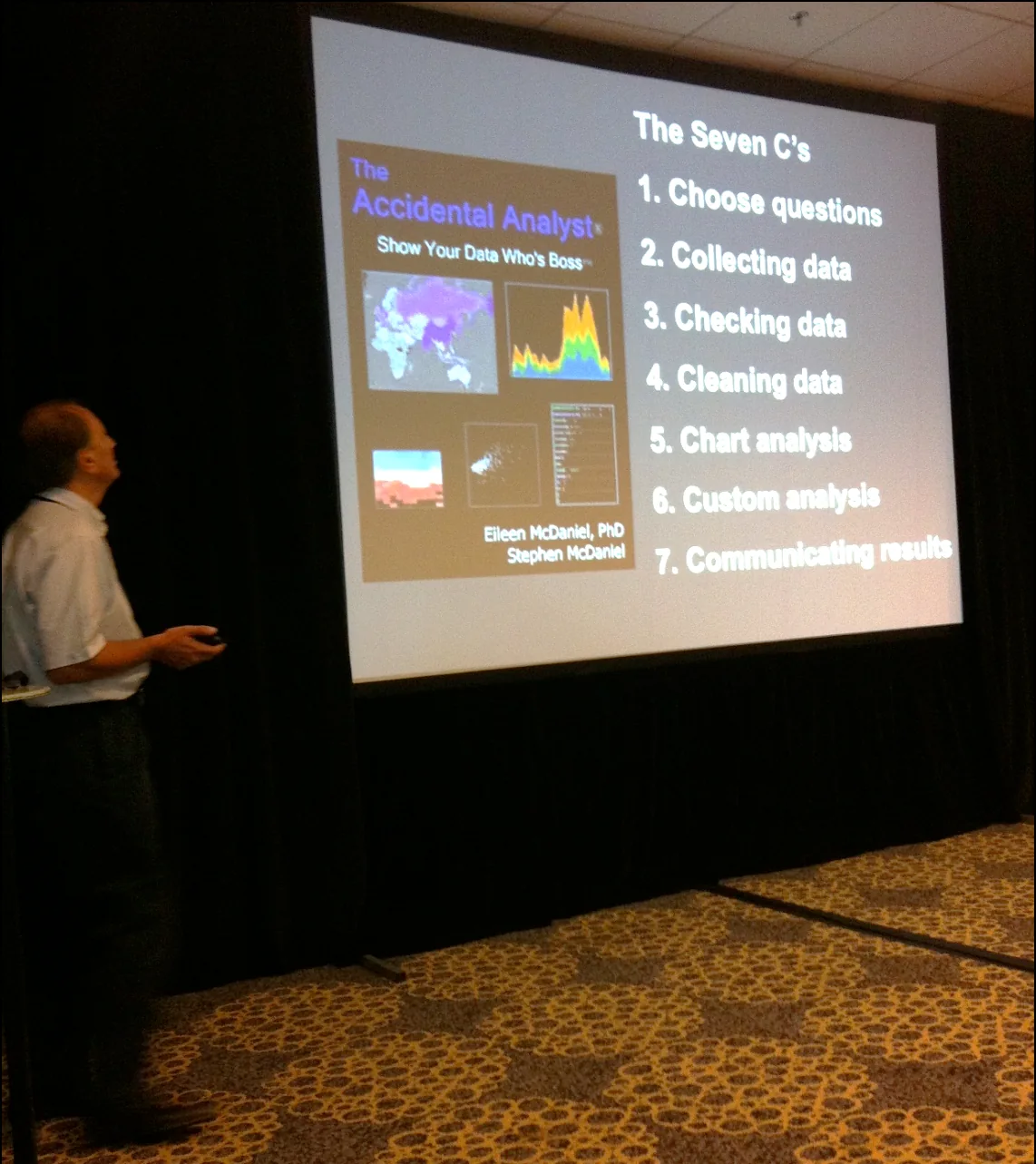
I taught practical customer value and marketing analytics for the American Marketing Association and coauthored The Accidental Analyst with Eileen McDaniel. At a Tableau Conference keynote, Tableau co-founder Pat Hanrahan discussed how that book influenced his teaching at Stanford.

In the FIP Lab, you watch me build, test, question, and revise models. Bring your own examples. Learn how to make the calls yourself.

Explore the LTV Lab
A Tableau Conference presentation screen featuring The Accidental Analyst and its Seven C's approach
Pat Hanrahan, Tableau co-founder, discussed The Accidental Analyst in a Tableau Conference keynote and how it influenced his approach to teaching analysis.
Professional endorsements

Good work earns trust.

Feedback on Stephen's professional work and published writing. These are not testimonials about a Forecast Integrity Partners engagement.

“Stephen looks at what the business needs and works back to the technology.”
John LodmellFormer CFO, Nordstrom Credit Services
“A wonderful book, filled with practical advice.”
Stephen FewAuthor, Show Me the Numbers, on The Accidental Analyst
Published case work you can inspect

See the customer economics.

In November 2009, Tableau published Visual Management of Marketing Programs, a case study by Eileen McDaniel, PhD, with Stephen McDaniel as contributor.

Using a boutique winery's customer data, the work combined demographic and transaction records to segment customers, estimate lifetime value, and translate those estimates into marketing decisions. The published case describes three strategic dashboards for management.

2009Tableau publication
Customer economics case
3Strategic dashboards
Described in the paper
Read the original case study (PDF)

The published customer data was modified for confidentiality. This historical example demonstrates the analysis and presentation method, not a measured ROI improvement, verified forecast-accuracy uplift, or a completed FIP engagement.

Cover of Tableau's 2009 whitepaper Visual Management of Marketing Programs
What a current model review should prove

Show the model. Test its predictions. Size the decision.

Historical experience establishes the method. A modern engagement has to produce evidence from your own cohorts, economics, and decisions.

01

Reconstruct value

Make cohorts, contribution margins, acquisition costs, time horizons, and exclusions explicit.

02

Backtest the forecast

Where historical predictions and outcomes are available, compare them across periods and customer segments.

03

Quantify the choice

Size channel economics and retention opportunities as scenarios, with assumptions and uncertainty visible.

The deliverable is evidence you can challenge and reuse. The exact performance measures and economic estimates depend on data availability and the agreed engagement scope.

Two ways to work together

Learn it with me. Or have me build it for you.

If you're ready to understand customer economics for yourself, start with the hands-on Lab. If you run an established subscription business, we can validate the model you already have, identify where it fails economically, or build an owned system around your products and customers.

Free customer economics resources

Get the six LTV lessons and the starter workbook, free.

Six foundational lessons and a synthetic-data workbook are being released during the initial rollout. Join the list to get each one as it is published, and to see cohort dates before enrollment opens.

Preview the six-lesson outline